A free beginner’s starting point
Five simple prompts for your first useful AI conversation.
You do not need a clever formula. Pick an ordinary task, say what you need, and ask for a change if the answer misses the point.
Copy one request into ChatGPT or the AI assistant you use. Change the details to fit your situation. These are fictional practice prompts, not promises of a particular result.
Use made-up details while practicing. Leave out names, addresses, account numbers, and private documents.
First prompt 01
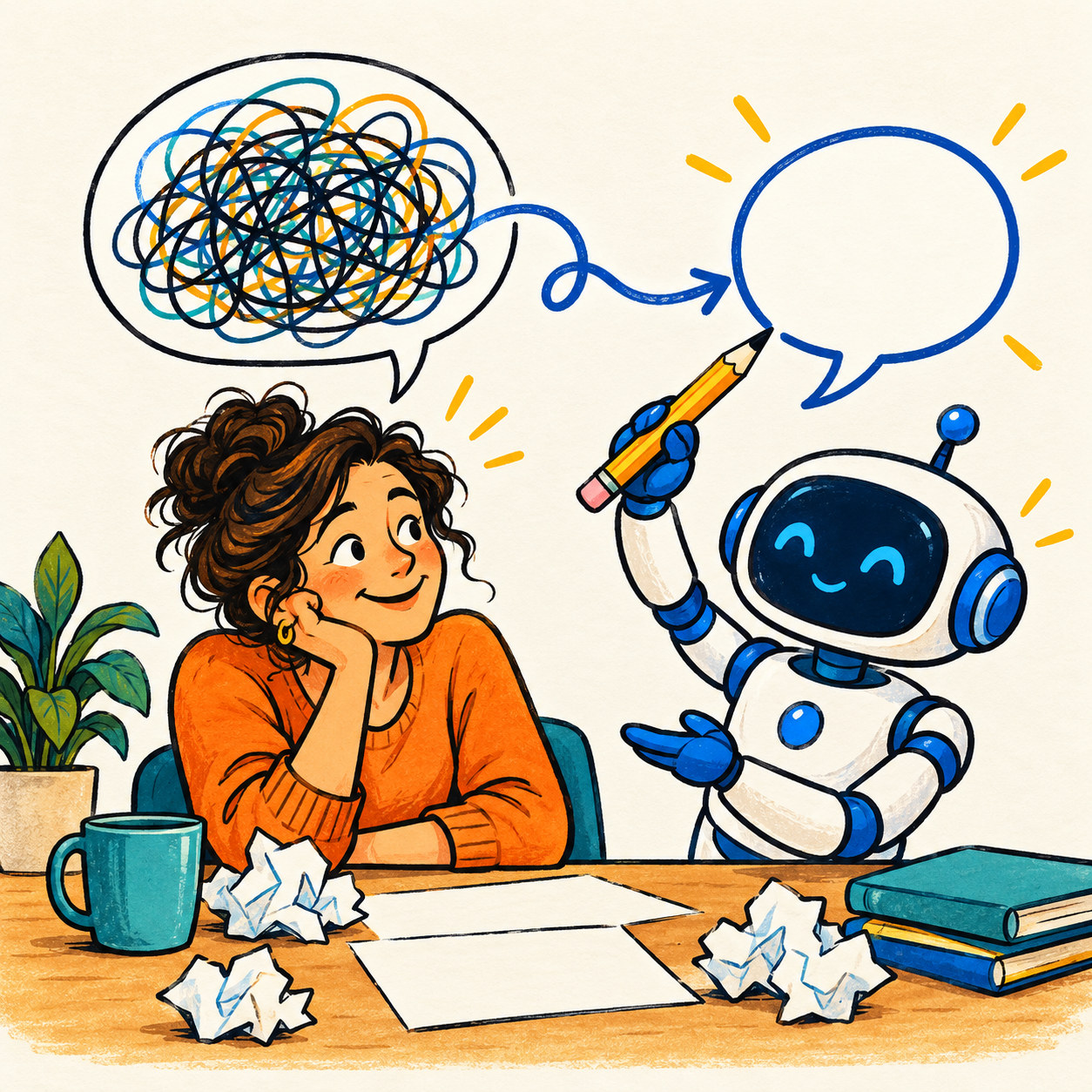
Write a message you have been putting off
Turn rough notes into a short message. You decide what to send.
Try this request
Help me write a friendly text to reschedule a visit. I cannot make Thursday. Offer Saturday morning or Sunday afternoon. Keep it under 60 words. Do not invent a reason.
Then steer it: “Make it sound more natural and less formal.”
Before using the result: Check the dates and tone. Drafting a message does not send it.
First prompt 02
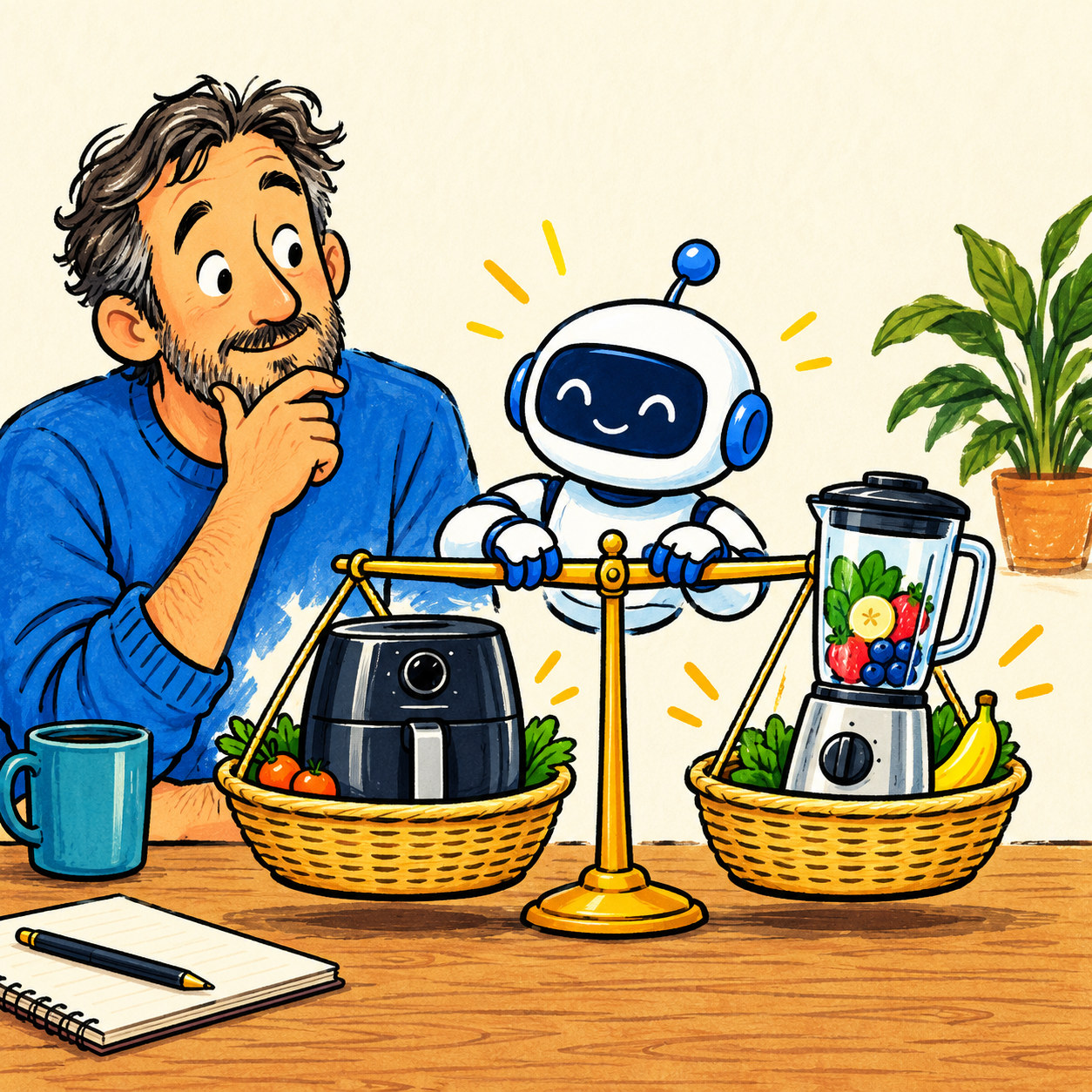
Plan meals around what you already have
Give a short ingredient list and a time limit.
Try this request
Suggest three simple dinners for two using rice, canned beans, eggs, carrots, and frozen peas. I can buy up to three extra ingredients. Each meal should take about 30 minutes. List the extra ingredients separately.
Then steer it: “Choose one dinner and give me numbered cooking steps.”
Before using the result: Check food labels, allergies, storage, and cooking instructions yourself. A suggested meal is not a medical diet.

First prompt 03
Turn a pile of tasks into a manageable plan
Ask for a small next step when a project feels too big.
Try this request
I have 45 minutes to tidy a small desk. It has loose papers, cables, pens, and a few things that belong elsewhere. Give me a simple plan in three stages. Include a place for papers I need to review later.
Then steer it: “I only have 15 minutes now. Cut the plan down to the essentials.”
Before using the result: Keep documents until you have checked whether you need them. Do not let a suggested tidy-up decide what to throw away.
First prompt 04
Compare options without inventing facts
Use made-up details for practice, then compare the information you can verify.
Try this request
Compare these two fictional desk lamps in a small table. Lamp A costs $25, has three brightness levels, and a one-year warranty. Lamp B costs $38, has five brightness levels and a USB charging port; warranty is not listed. I mainly want a reading light. Use only these details. Tell me what is missing before recommending either.
Then steer it: “Give me three questions to ask the seller before buying.”
Before using the result: The example prices are fictional. Verify current prices, specifications, return terms, and missing facts with the seller.
First prompt 05
Make a paragraph easier to understand
Paste a short, non-private passage and ask for a clearer explanation.
Try this request
Explain this fictional notice in plain English: “The community room will be unavailable from Monday through Wednesday for maintenance. Existing bookings during that period must be rescheduled.” Give me the main point, what I need to do, and anything the notice does not tell me.
Then steer it: “Make it two short sentences without losing the dates.”
Before using the result: Compare the answer with the original. Ask the sender about anything the notice leaves unclear.
When the first answer is not useful
Tell the assistant what to change: “Use simpler words,” “Give me one next step,” or “Use only the facts I supplied.” Check dates, amounts, and other details against your original information.
Want to see a request and an example answer together? Try the repair message and bill comparison.
Continue at your own pace
Everyday Help with AI
A plain English guide to getting started. The illustrated e-book includes seven control lessons and everyday examples you can read, try, and return to.
PDF + EPUB · $12.99 USD
Both reading formats in one ZIP, with Read Me First instructions. E-book only; no audio. Checkout shows applicable taxes.